EE 5G Lead Page
EE 5G '5GEE' Introduction
EE acquired 40MHz of 3.5GHz spectrum for 5G use in April 2018. EE then launched their commercial 5G service on 30th May 2019, initially in the UK's four nation capitals: London, Cardiff, Edinburgh, Belfast and also Birmingham and Manchester. Since then, 5G deployment has significantly increased in footprint, as well as bandwidth and carriers, with up to 80MHz available in n78, up to 30MHz paired in 2600MHz, 20MHz paired 2100MHz, 20MHz paired 1800MHz and 10MHz paired 700MHz.
Historical Huawei sites
Please note that these Huawei 5G sites are shown for historical value. EE has been undertaking an extensive programme of work to vendor swap to Nokia and Ericsson.
Huawei 8T8R
EE readily deployed Huawei 8T8R n78 early in their rollout. These examples in Hull and Manchester used Huawei RRU 5258 for 8T8R N78 and Huawei AOC4518r8v06 antennas to carry the 5G and 2G/3G/4G.
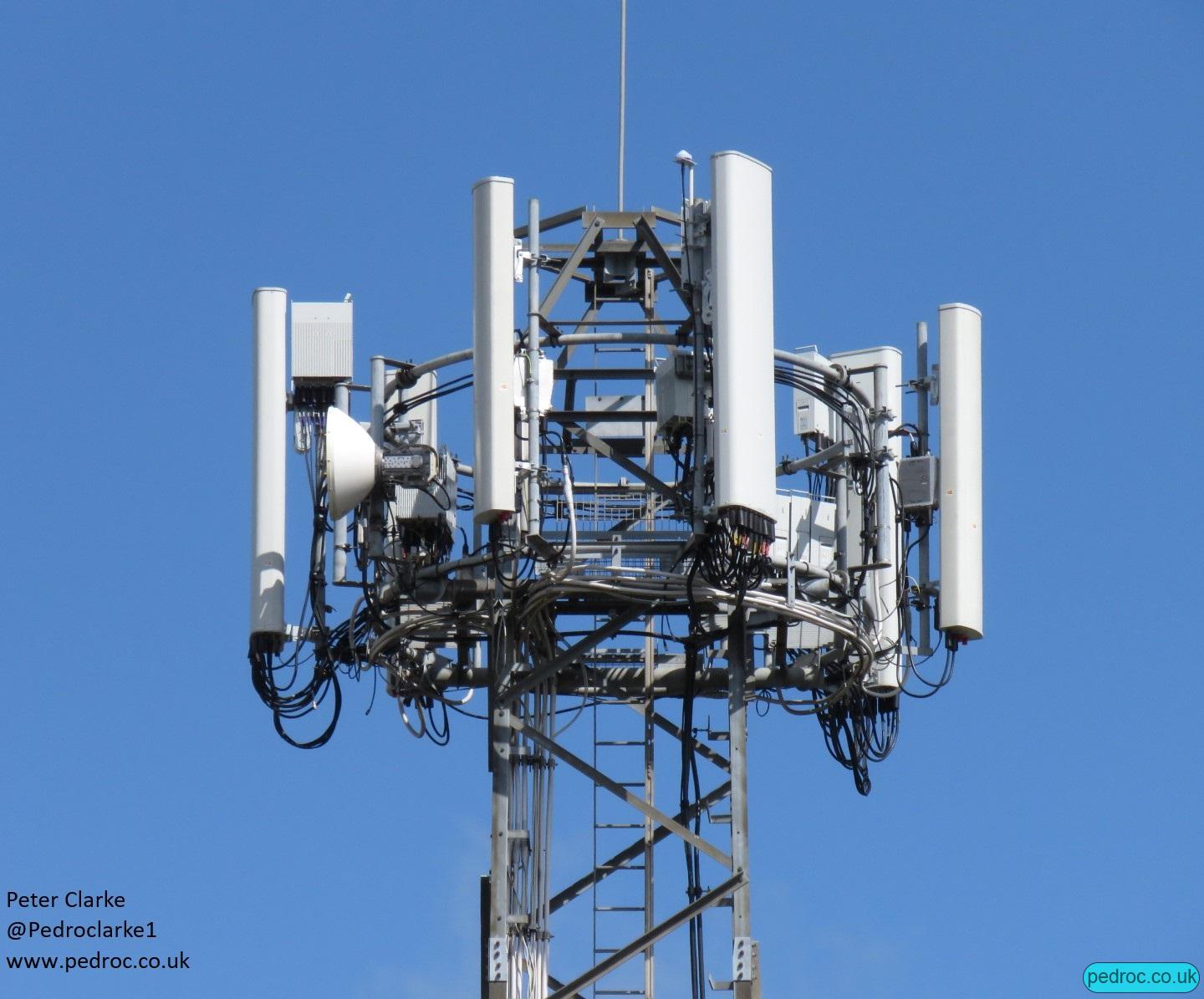
A fully wired EE 5G '5GEE' example in the Marfleet area of Hull.
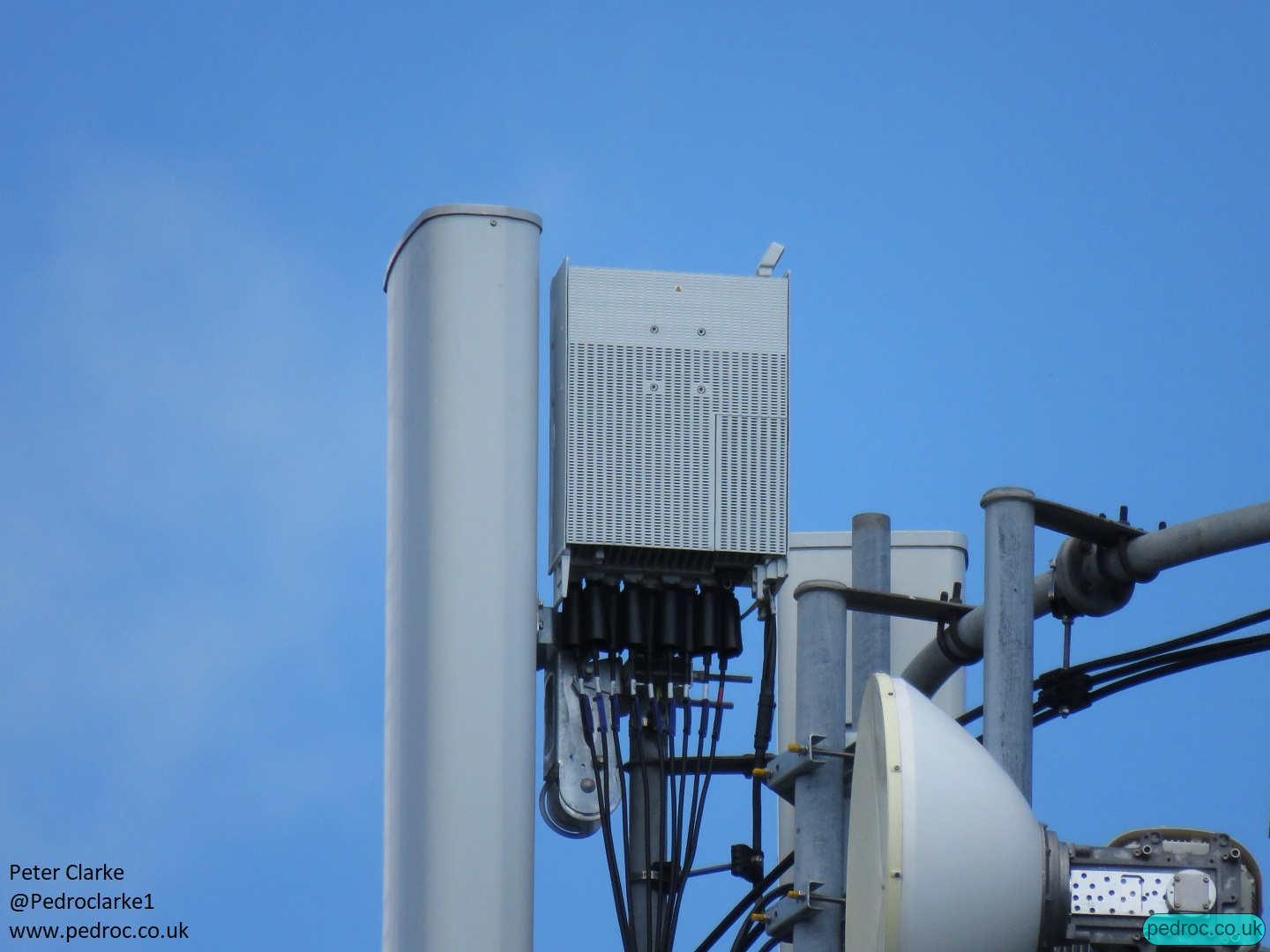
Huawei 5258 for 8T8R N78 behind Huawei AOC4518r8v06 antenna on this '5GEE' mast.
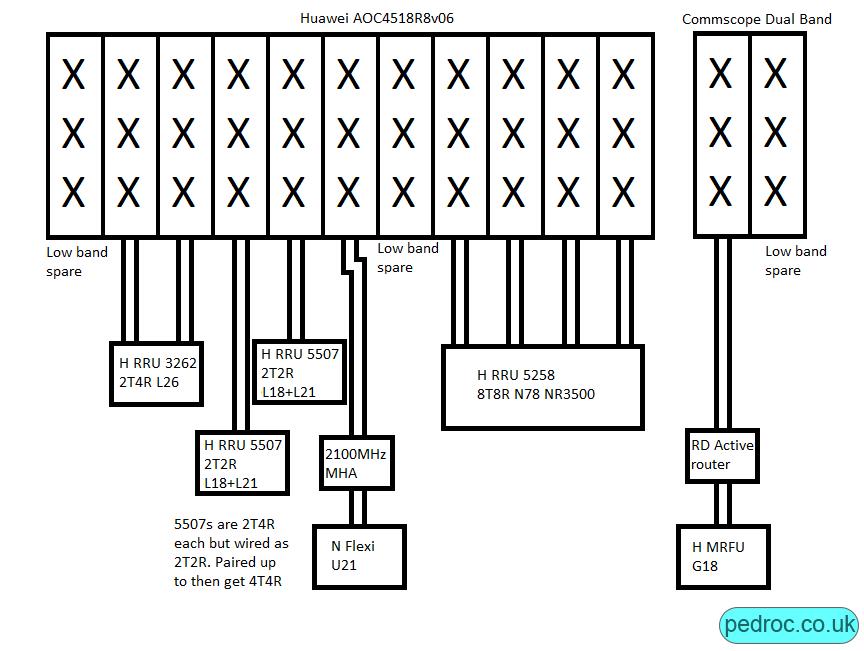
Schematic showing the RF layout of the EE 8T8R 5G site.
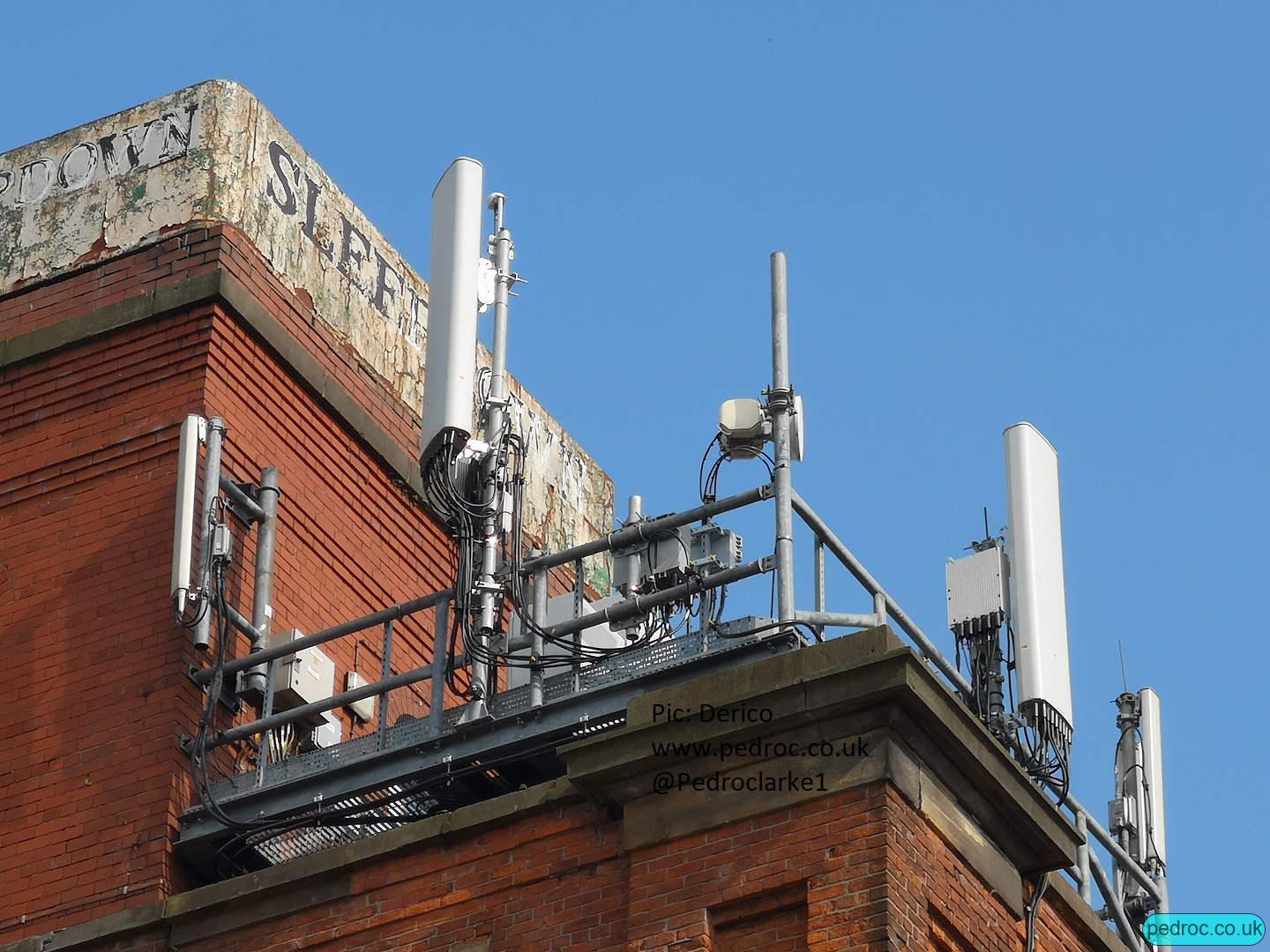
A fully wired EE 5G '5GEE' example on Manchester's Bower Street.
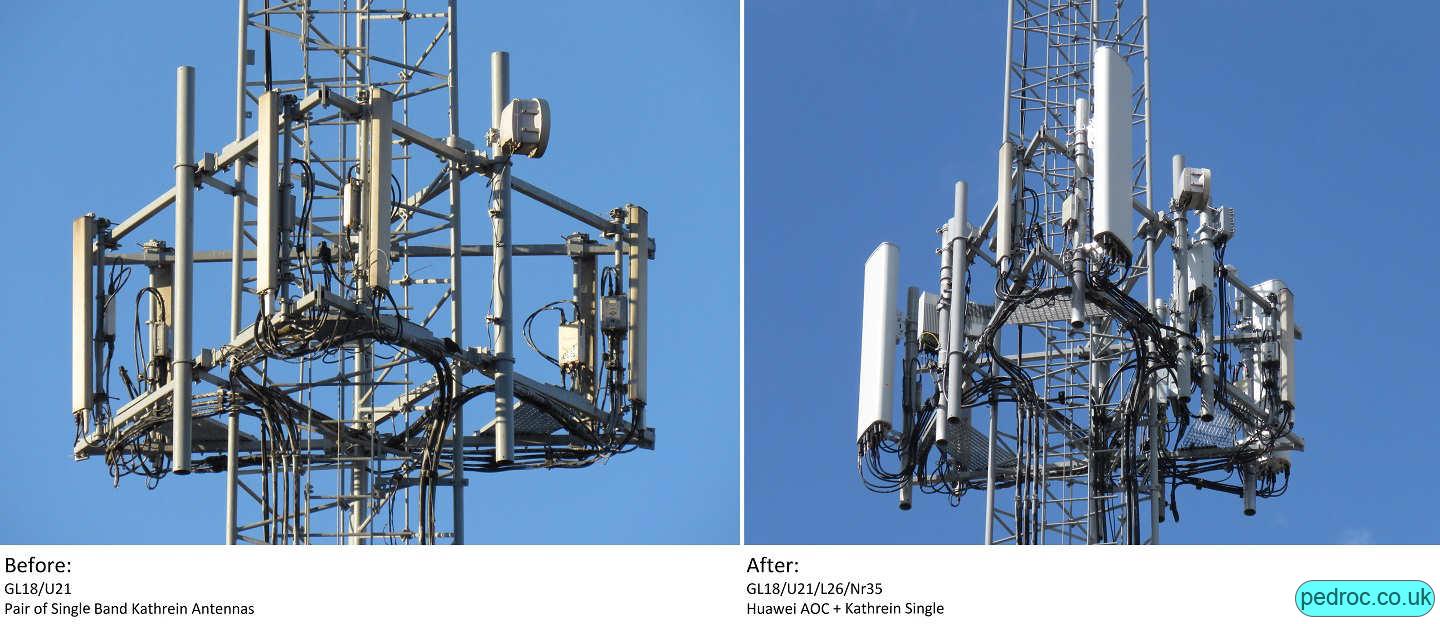
Before and after of an EE Huawei 5G Mast Upgrade.
5G '5GEE' Massive MIMO
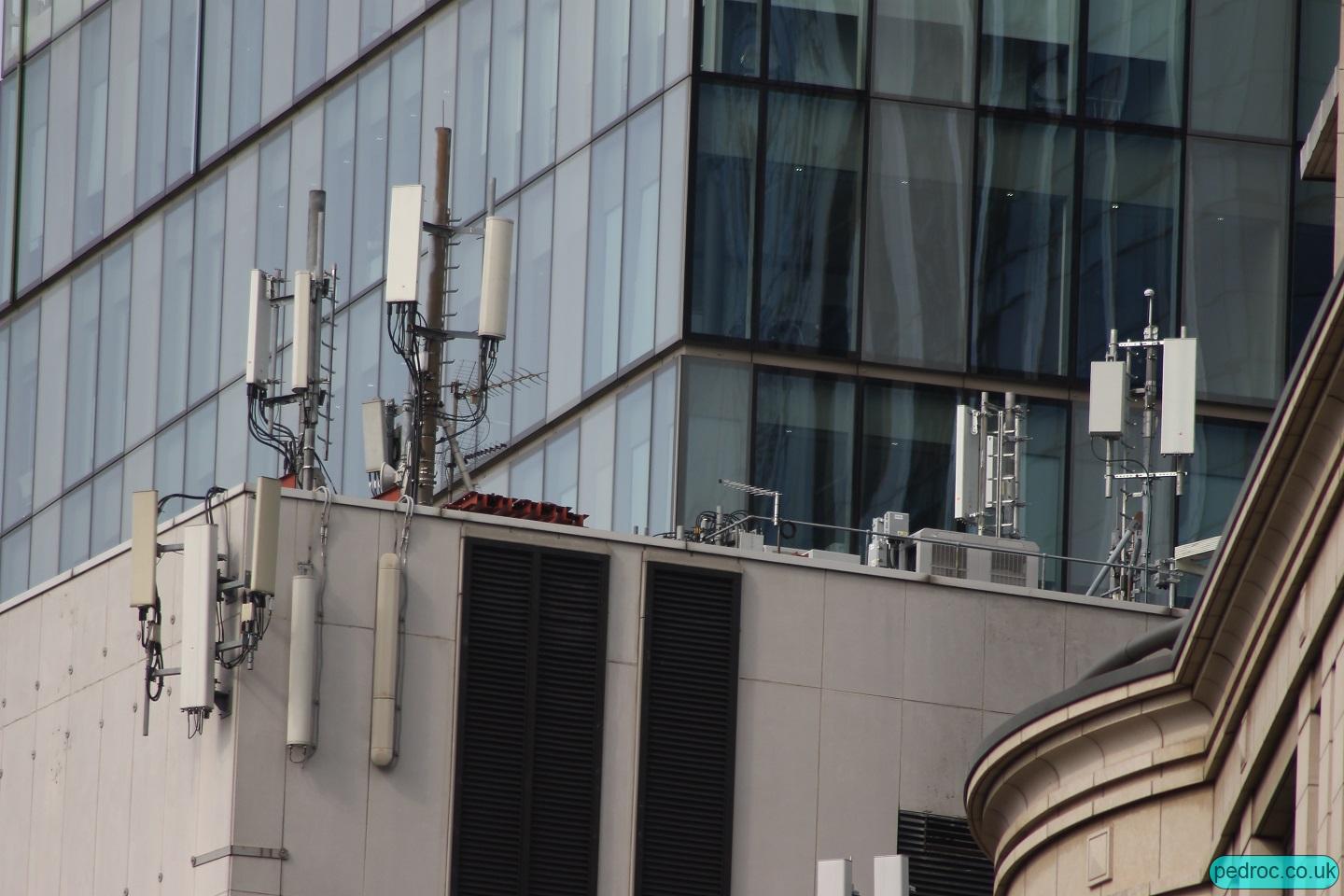
In central London, such as near St Paul's, EE used Huawei Massive MIMO for their 5G. Deploying the 5G spectrum with Massive MIMO enables huge amounts of capacity to be provided to an area, while also achieving a pleasing range of coverage considering the higher frequencies compared to 4G.
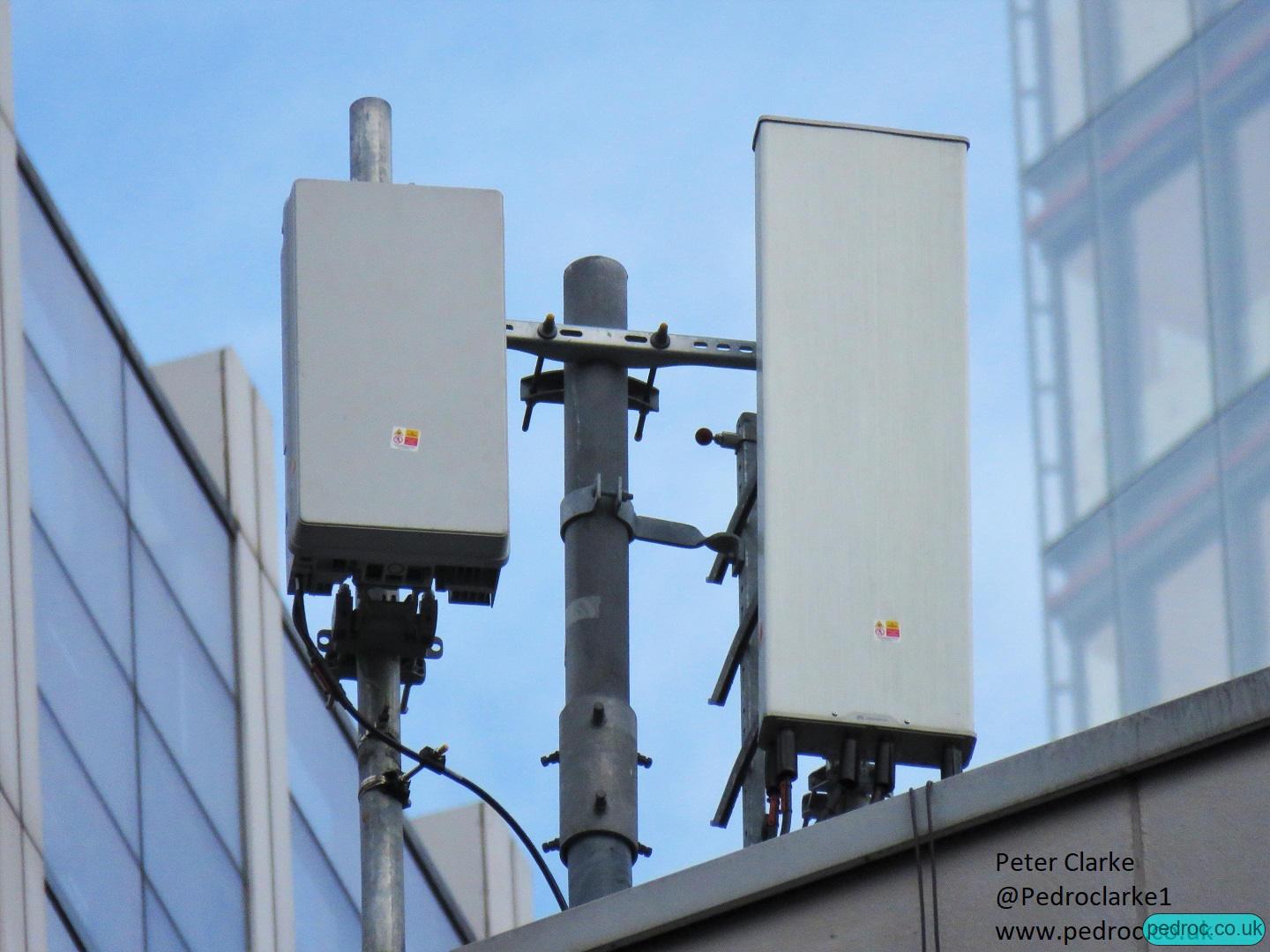
5G Massive MIMO Panel (Huawei AAU5613) on the left.
Introduction
Ericsson is a key vendor in BT/EE 2G, 4G and 5G.
EE Ericsson 2025 Configurations: Introduction
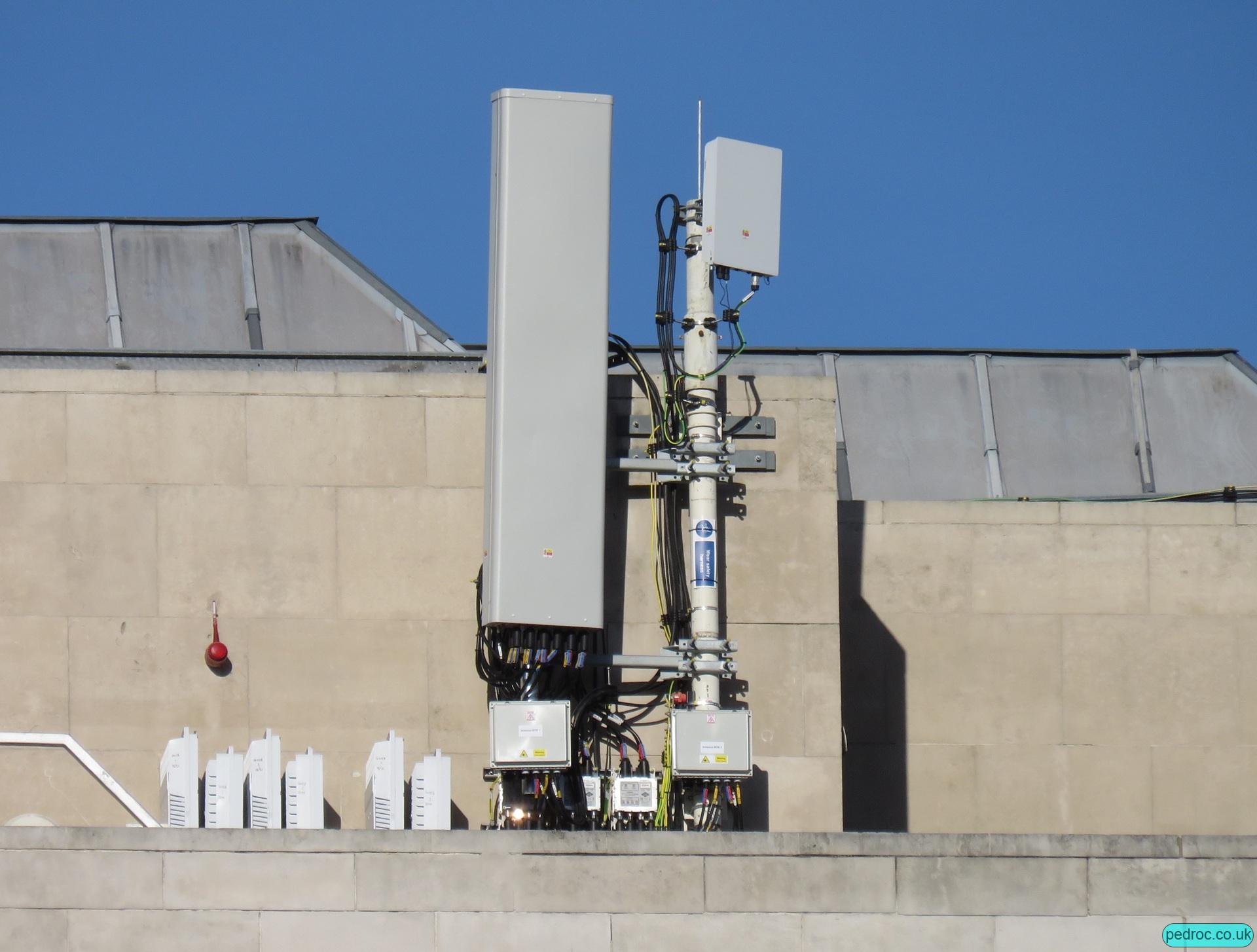
Ericsson is a key vendor in BT EE's modern network portfolio, utilised in many urban, ultra-urban, and some rural locations. The above is a flagship permanent multi-beam EE capacity site serving Hyde Park Corner, central London, with spectrum deployment of 1800, 2100, 2600MHz and 3500MHz+3700MHz through dual band 1800+2100MHz ERS 4490, ERS 4419 for 2600MHz and AIR AAU.
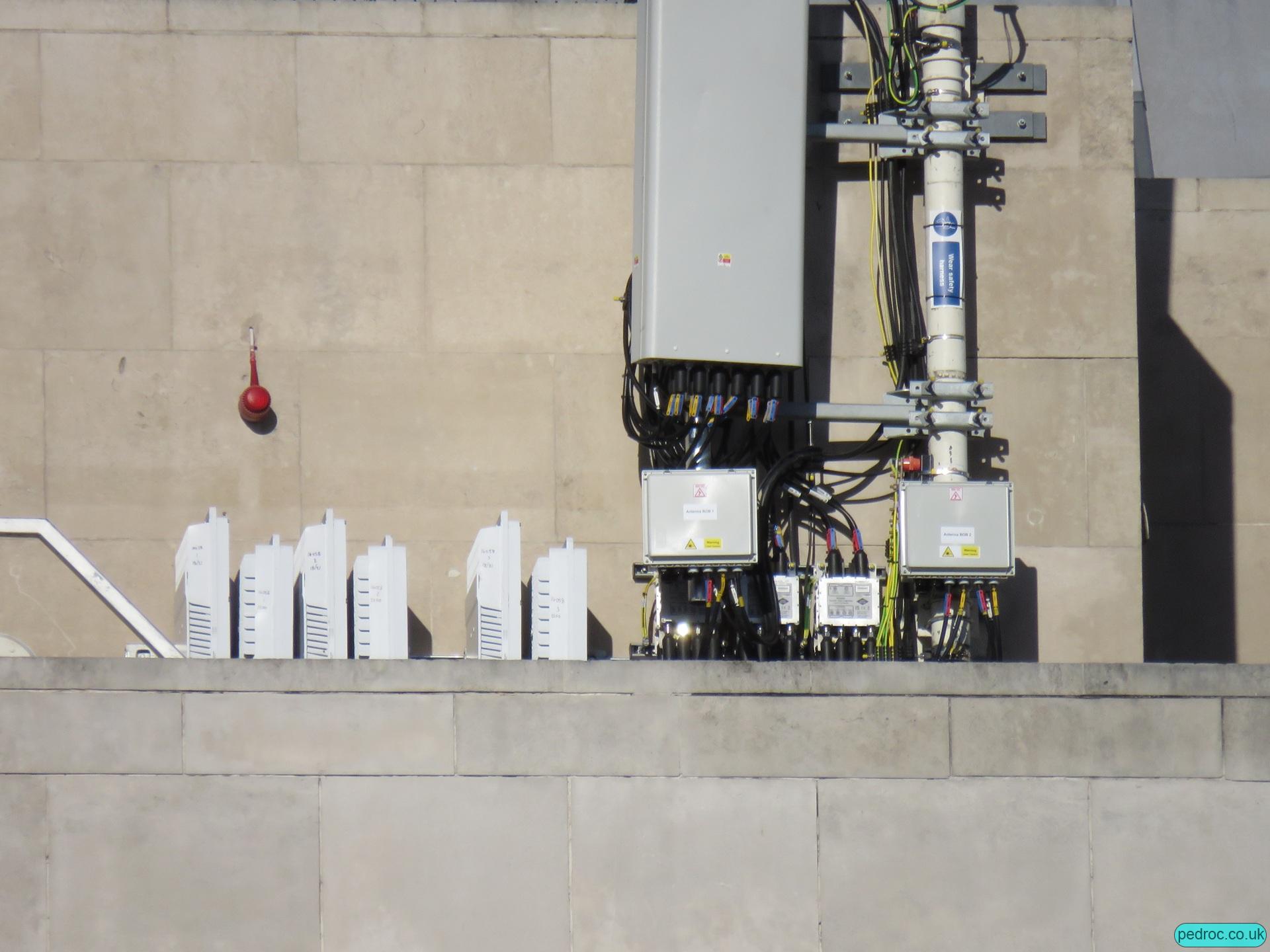
A closer view of the Ericsson ERS 4490 and ERS 4419 radios and multibeam antenna ports.
EE Ericsson "In-Place" 2T2R Upgrade
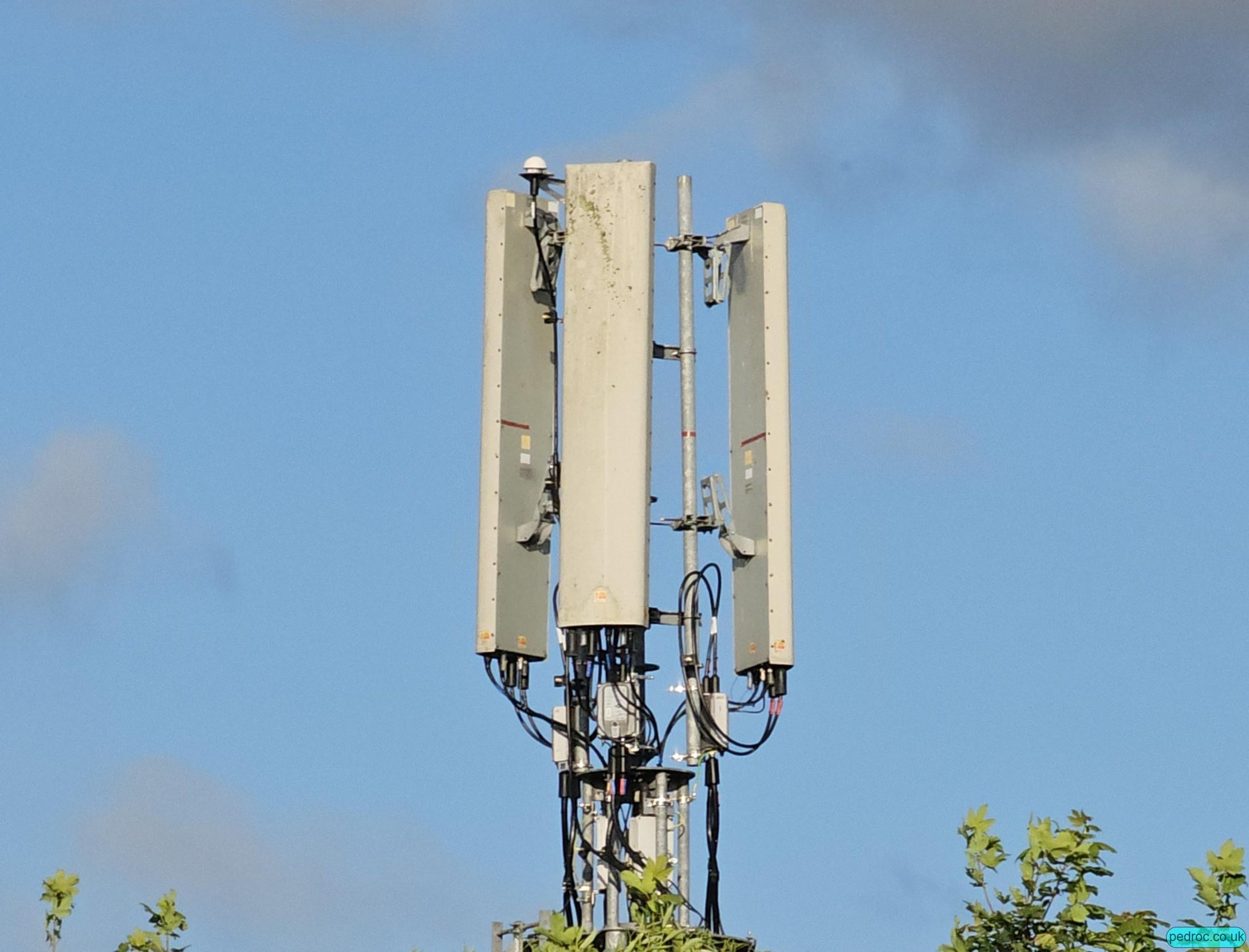
A site with four port panels upgraded from EE Huawei to EE Ericsson through use of dual band 2T2R Ericsson radios, supporting 1800MHz and 2100MHz for EE, including 40MHz paired of modern (LTE, NR) 1800MHz usage and 20MHz paired 2100MHz, as well as 1800MHz 2G.
EE Ericsson: Rural and Moderate Urban Medium Capacity
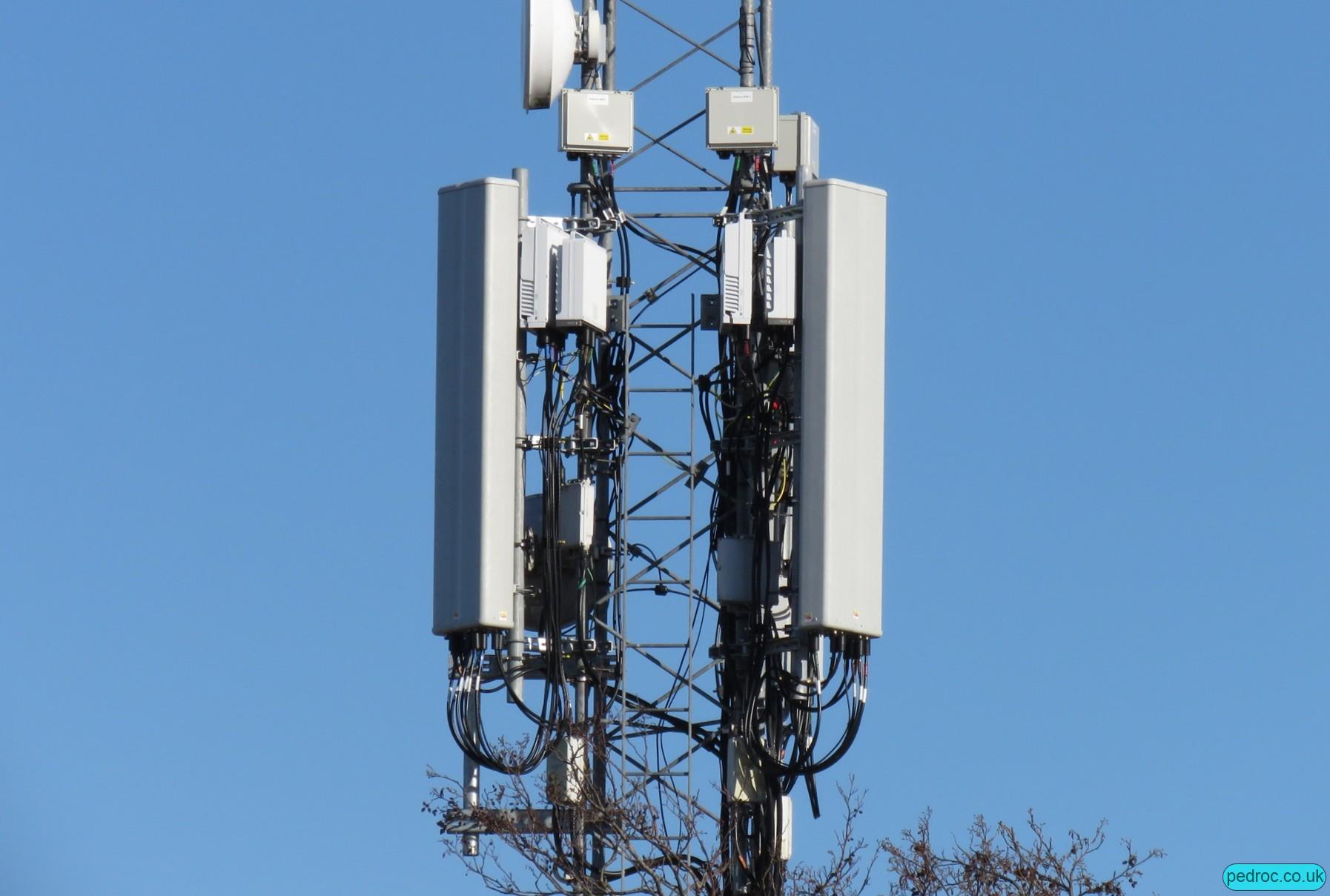
A typical configuration in rural and moderate urban areas that uses two RRUs per sector: ERS 2262 for 800MHz 4G, 700MHz 5G meanwhile ERS 4490 delivers 1800MHz 2G and 4G, 2100MHz 4G and 5G. These services are connected directly from RRUs to the passive antennas - the MHAs visible support Three's ground fed 800MHz and 1800MHz. At some locations ERS 2460 radios are utilised for low band with benefit of four way receive capability (4Rx).
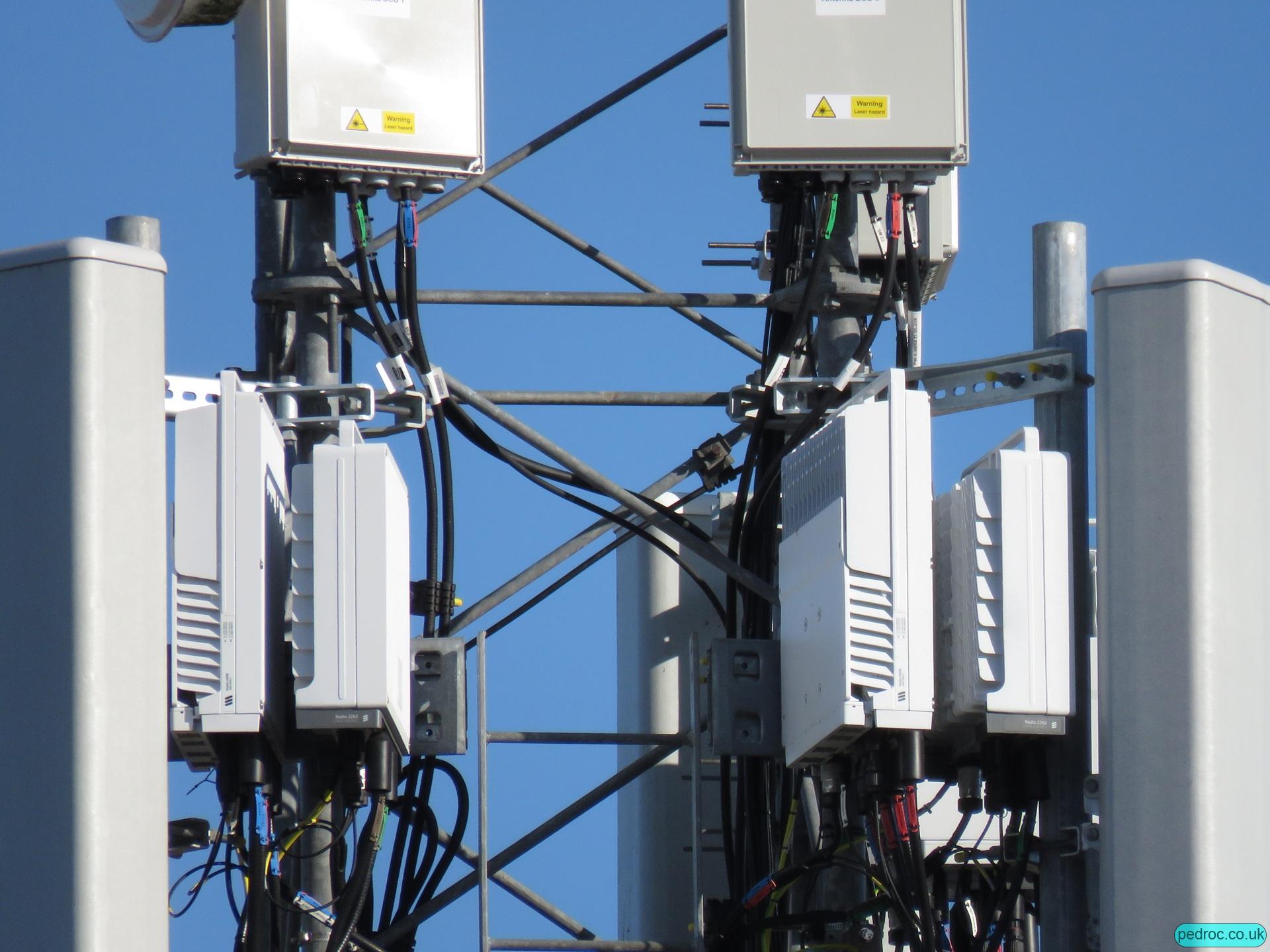
Closeup of aforementioned ERS 4490 and ERS 2262 radios.
EE Ericsson: Urban High Capacity - Massive MIMO n78
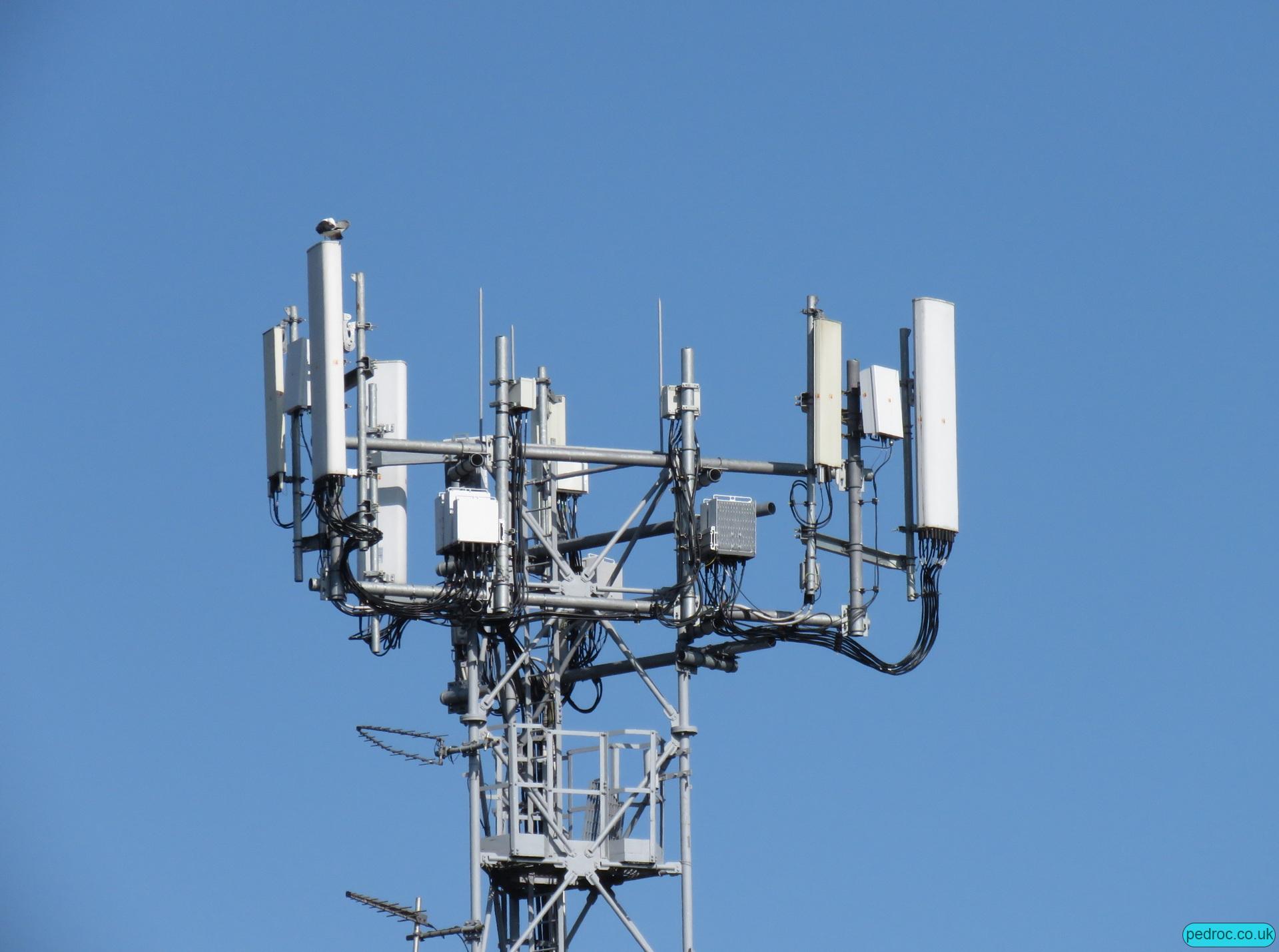
Highly loaded Urban sites tend to have a similar base configuration as the less busy sites but with the addition of 2600MHz +/- n78 capability. This example uses ERS 2460 for 700MHz and 800MHz, ERS 4480 (similar to ERS 4490) 1800MHz+2100MHz, as well as ERS 4419 for 2600MHz and Ericsson AIR Massive MIMO panels to support n78. Separately, the aged four port antenna supports Three 1800MHz.
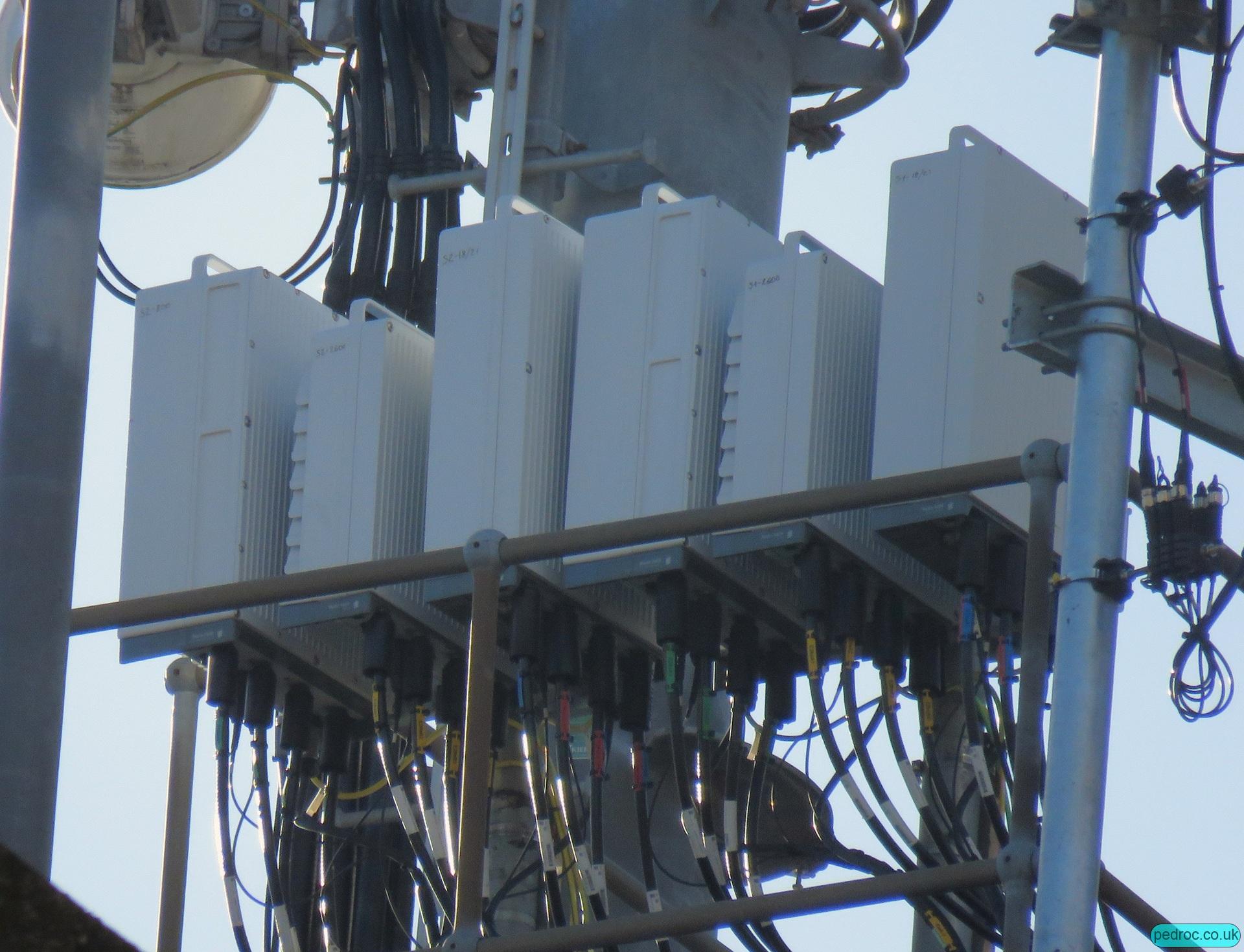
A bank of ERS radios supporting two sectors' FDD capability at a central London location. Left to right: ERS 2460, ERS 4419, ERS 4480, ERS 2460, ERS 4419, ERS 4480.
EE Ericsson: Urban High Capacity - 8T8R n78
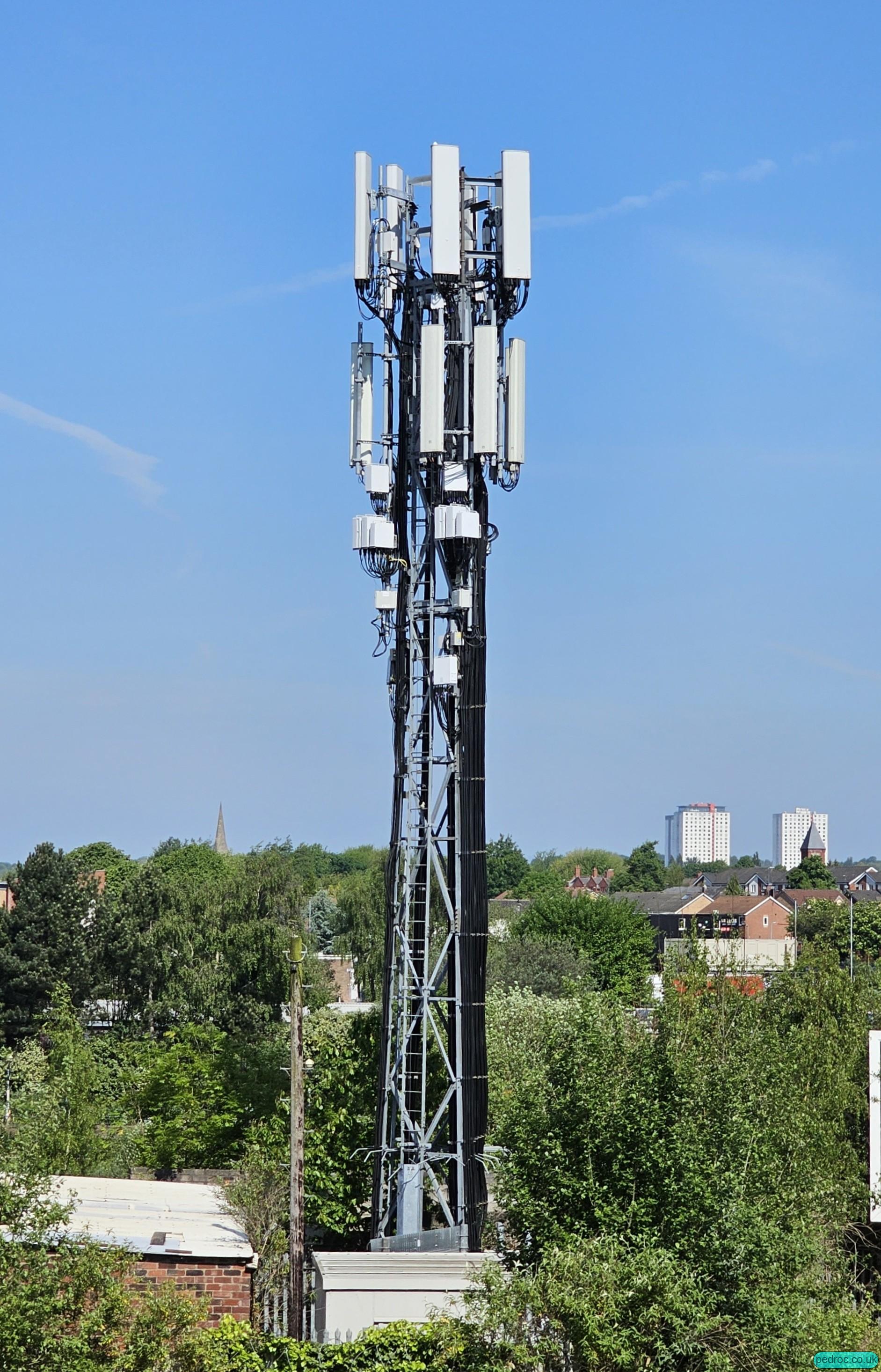
An EE (and Three) 8T8R n78 5G site. EE FDD is similar to the above site, the main difference is that the n78 is delivered through passive antennas connected to RRUs, rather than Massive MIMO panels. Notably Three also has 8T8R n78 here too.
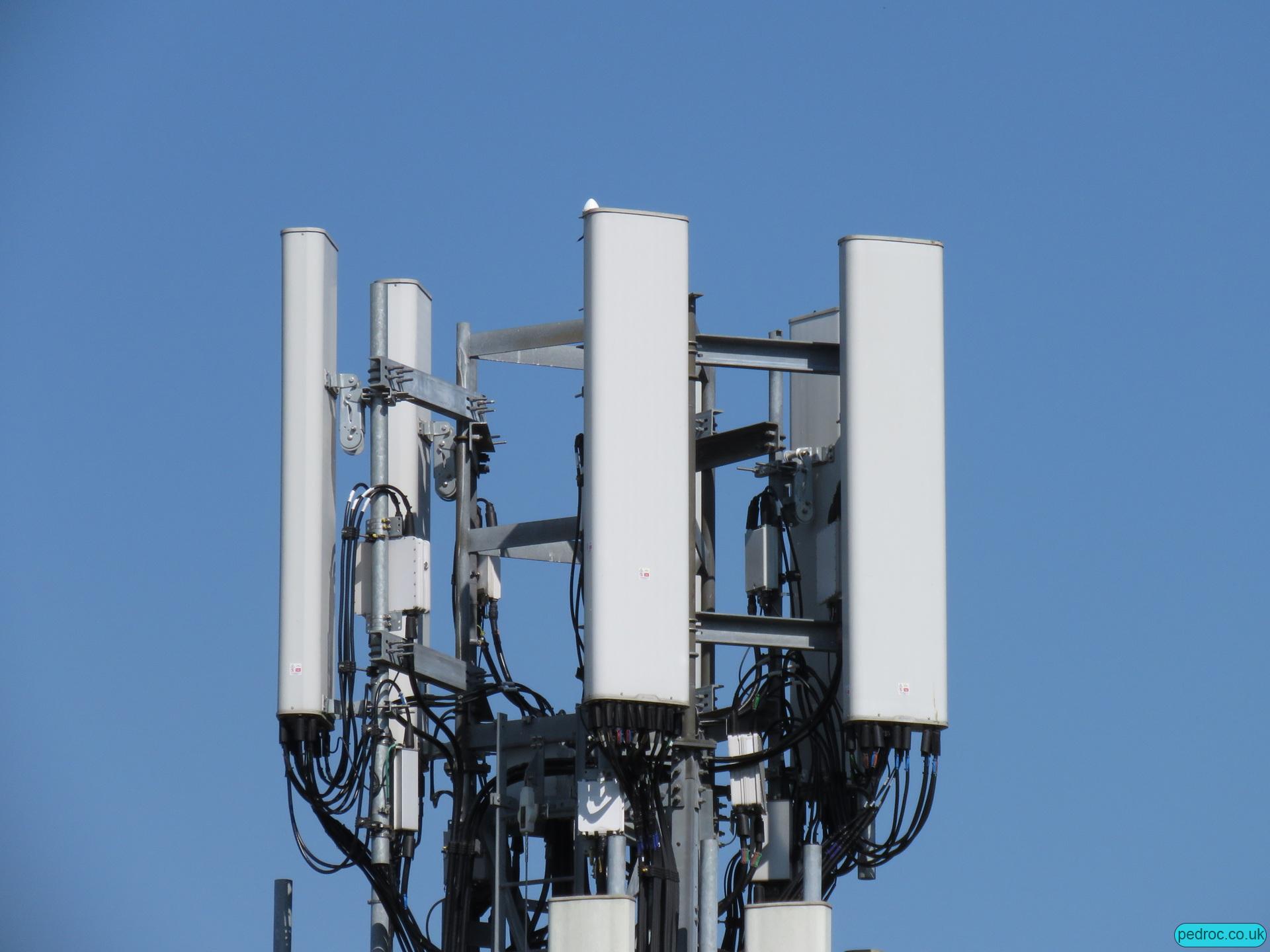
Closeup of the passive panels.
Some Early Belfast Ericsson Sites.
32T32R Example
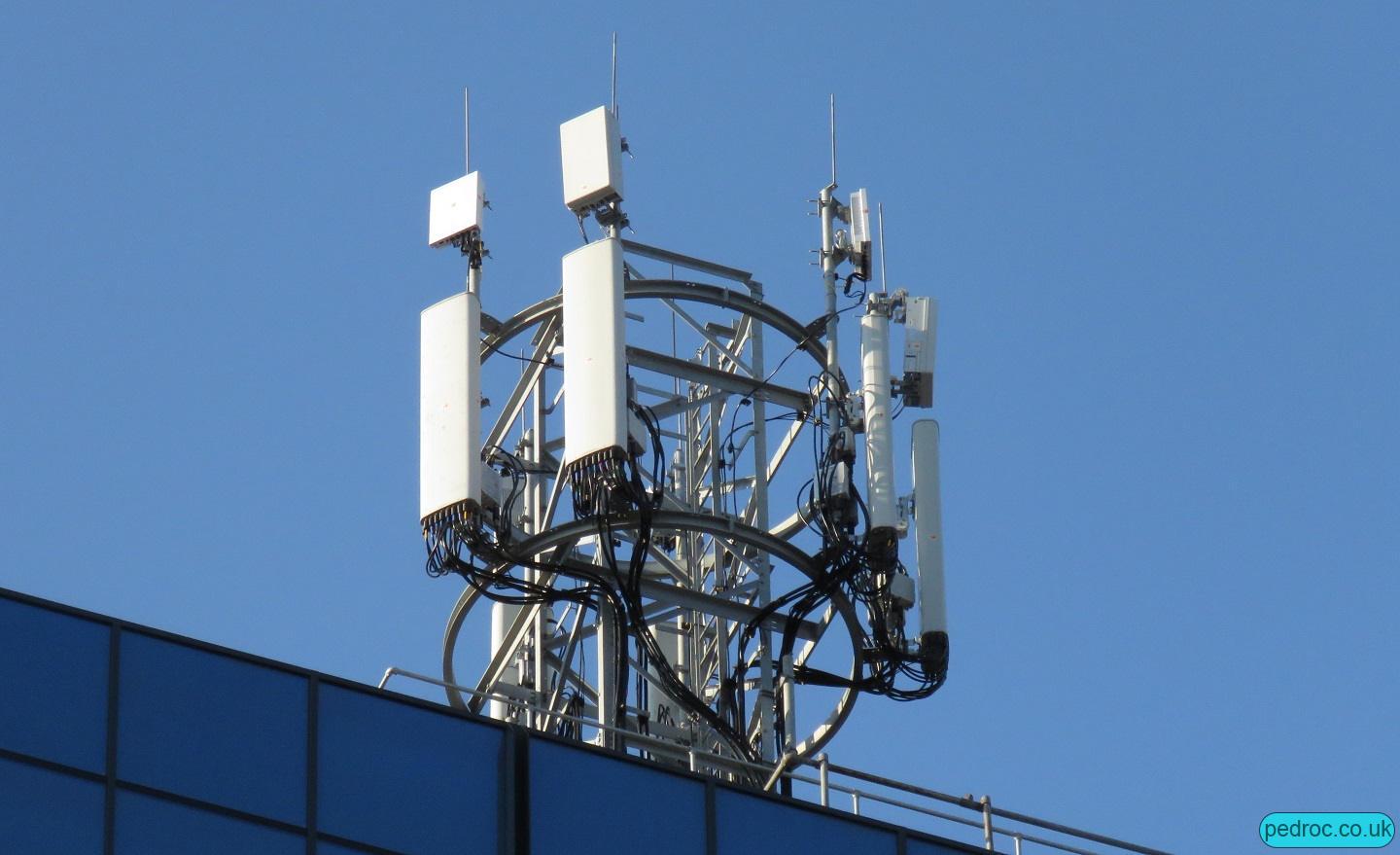
One of the first BT/EE Ericsson Massive MIMO 5G sites which uses 32T32R AIRs. BT/EE use various models. The Huawei AAUs on site were for operator 3.
8T8R
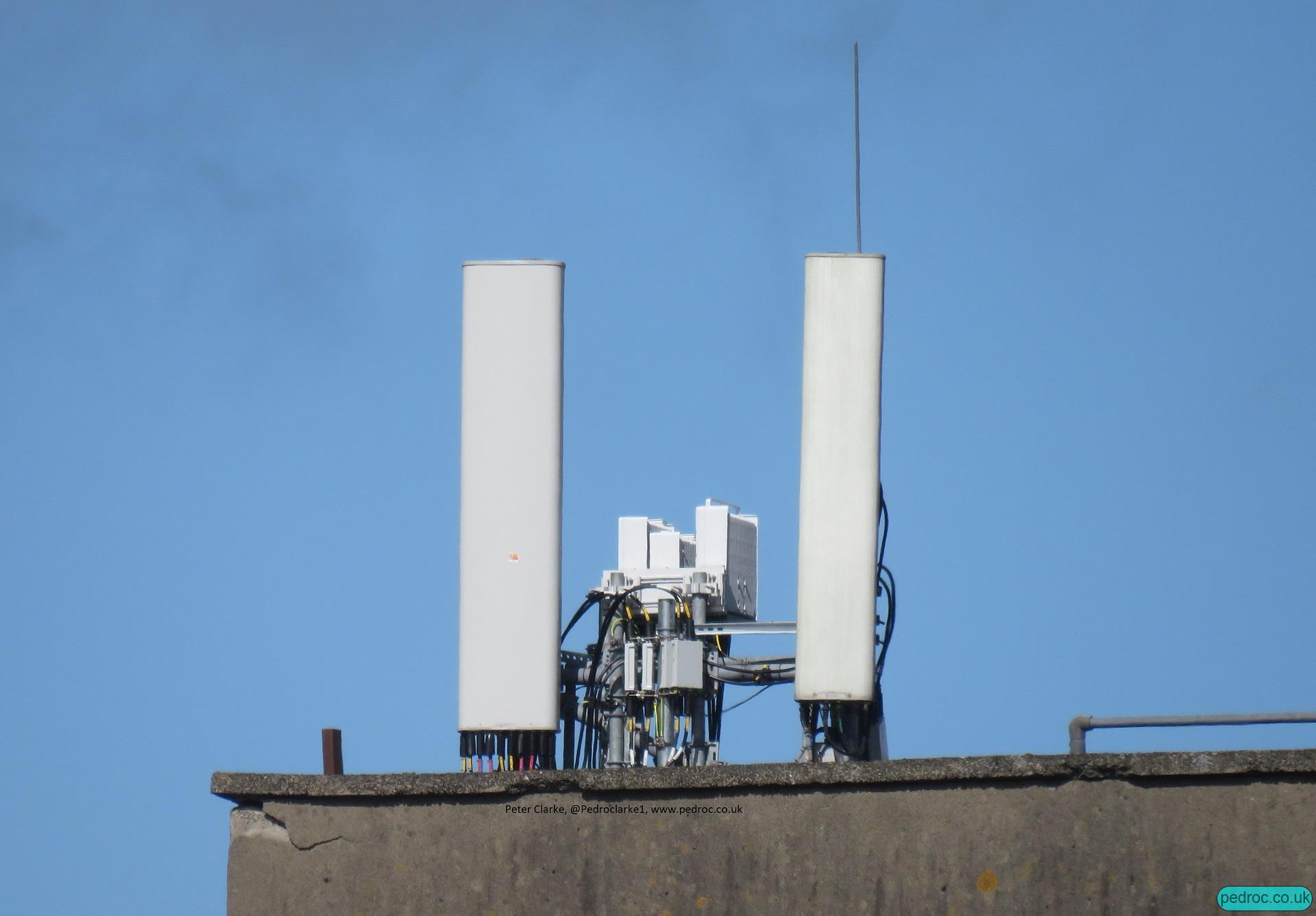
EE (BT) Ericsson 4G and 5G site in Belfast with Ericsson ERS 8823 (5G N78 8T8R), 4415 2600MHz, 4480 1800MHz+2100MHz feeding the left Huawei AOC antenna.
Modern EE Nokia Configurations
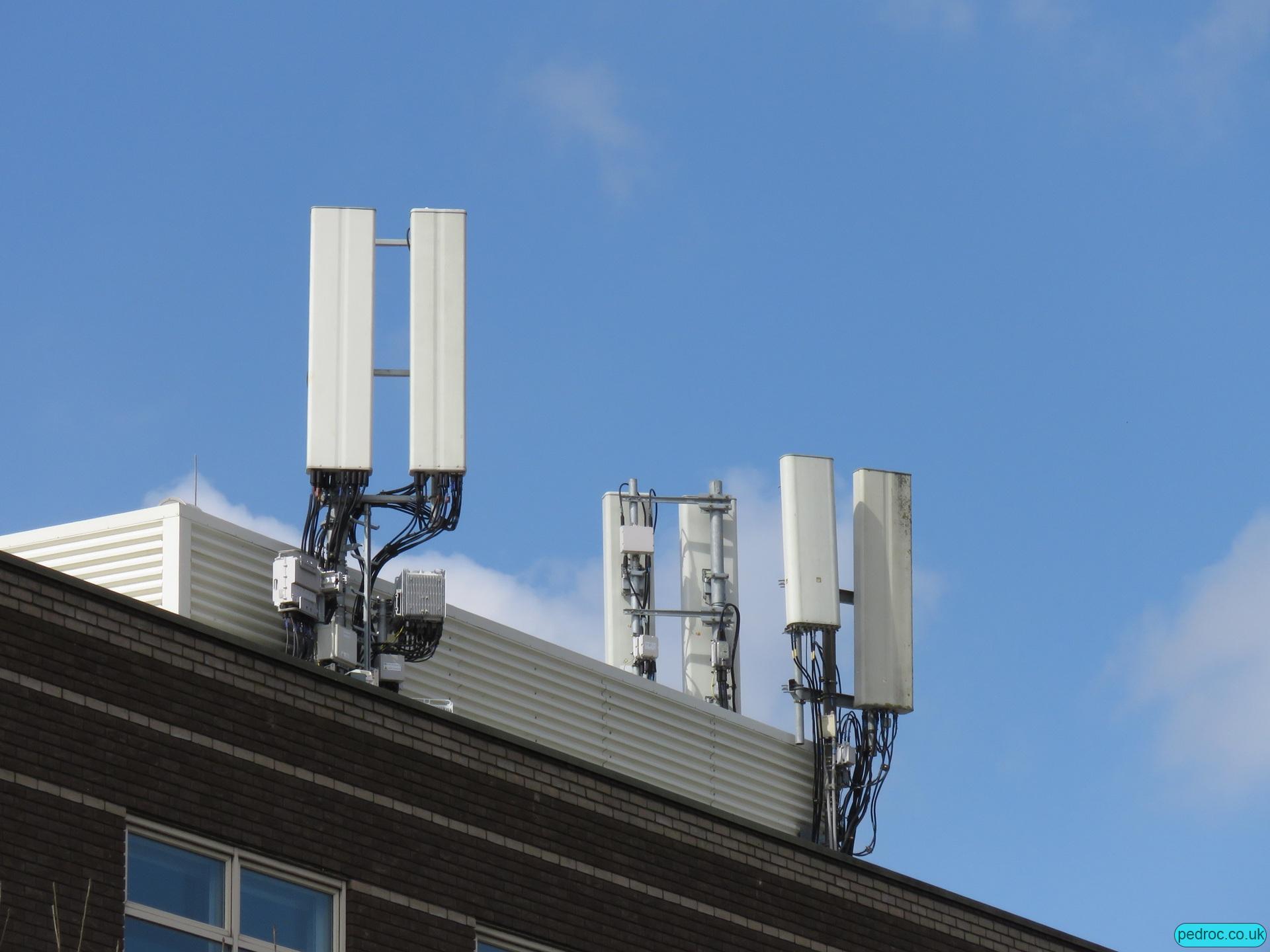
EE's Nokia zone includes some urban areas, as well as much of rural Great Britain. The high level architecture is often quite similar to the Ericsson zone in so far as multiple band radios are a common feature. The above site delivers capability for EE, Three, Virgin Media O2 and Vodafone, but, for this section, we are focusing on the left passive, and the radios found below it.

The highest radio is for 3500MHz+3700MHz, likely Nokia AZQJ. On the lower left is the low band radio for 700MHz and 800MHz with EE typically using Nokia models AHPMDA or AHPMDB for this purpose. The lower middle radio delivers 2600MHz and is a Nokia ARHA meanwhile the right radio delivers 1800MHz and 2100MHz, likely being and AHEGB or AHEGC. Notably, many EE Nokia sites will use active antennas for 3500MHz+3700MHz, such as AQQQ.
Nokia 32T32R
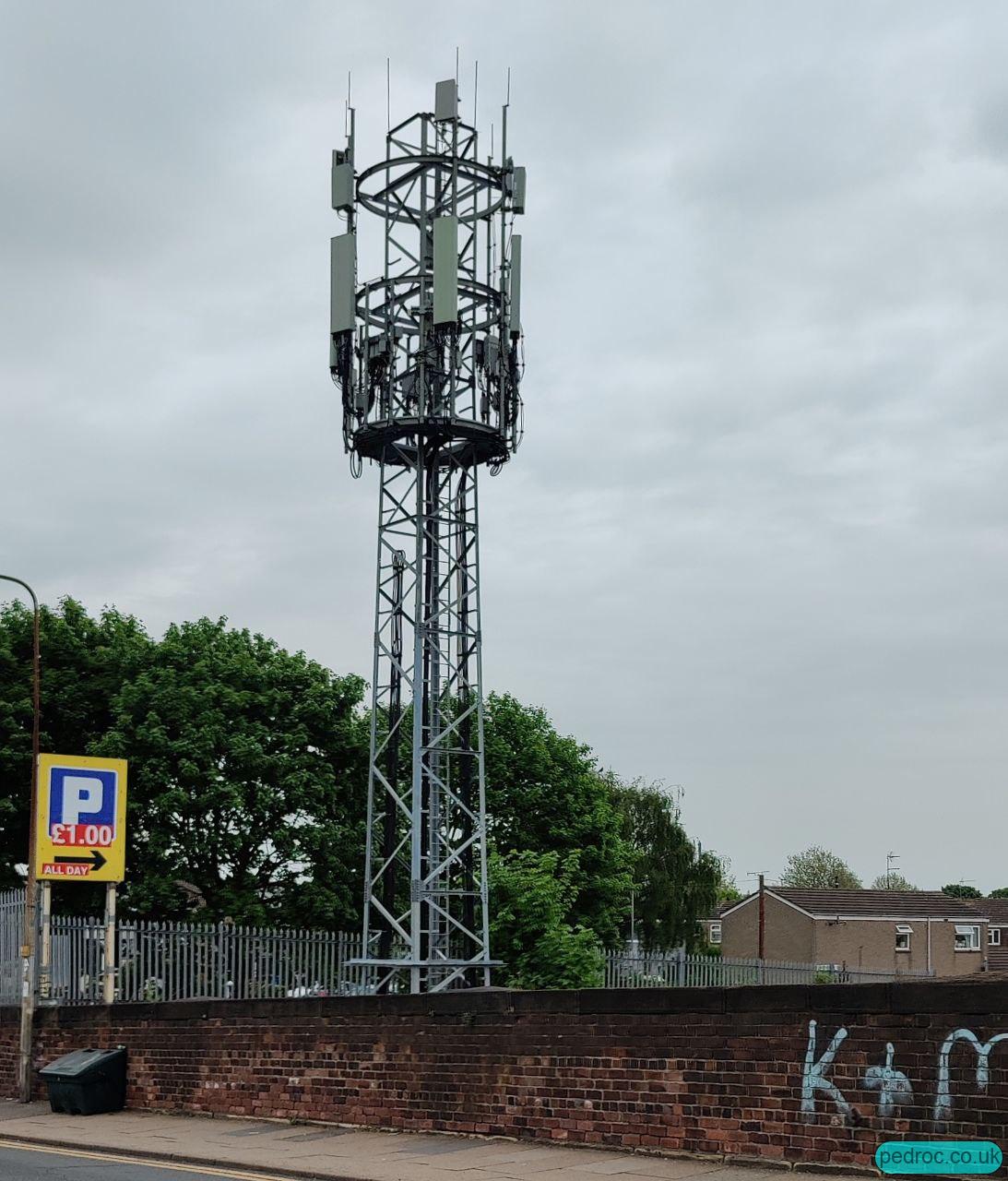
This Hull example is Nokia 32T32R for BT/EE using AEQQs.
Nokia 8T8R
Nokia 8T8R uses AZQL/AZQJ radios in a deployment like the Huawei and Ericsson examples.
Nokia 700MHz
700MHz capability is deployed via Nokia triple band AHPMDA or AHPMDB radios.
5G Monopole/Street Pole
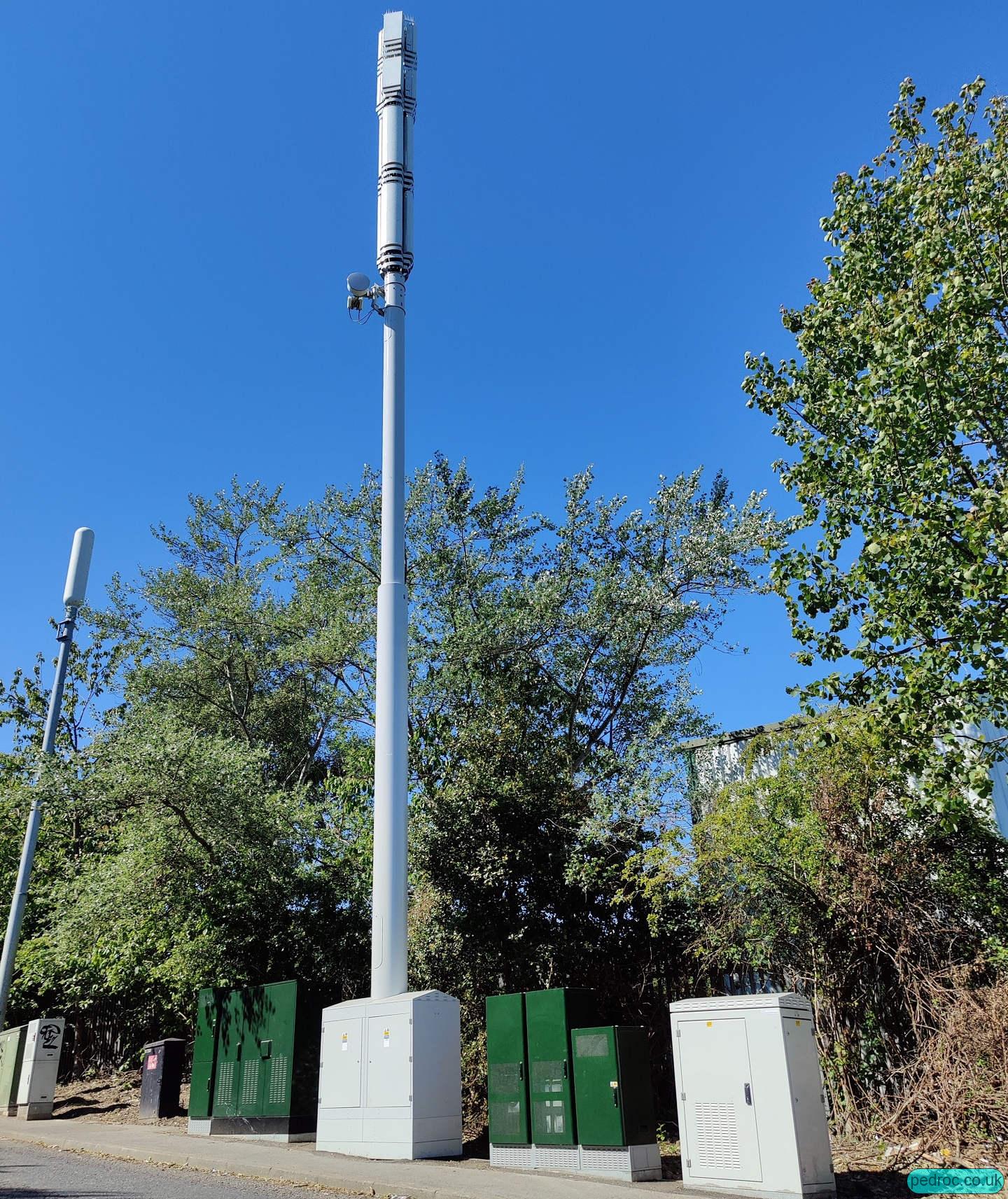
The modern design of compact pole to support 5G (and (2G)/3G/4G) services for EE and 3: the upper two stacks are used for 5G Massive MIMO antennas, each operator having their own stack, while the lower carry the passive antennas which emit the remaining respective technologies. Image: Mark.